
A first safety interim analysis of MOSA shows no signal of safety concerns with brincidofovir, a potential antiviral to fight Mpox
The MpOx Study in Africa (MOSA), a randomised, pan-African trial, reached a major milestone in December 2025. As detailed in a press release published on Thursday, January 8, 2026, the study’s Data Safety and Monitoring Board (DSMB) did not identify any safety concern after the first 50 patients were randomized, and recommended to continue study’s enrollment with brincidofovir, the first antiviral tested in this study and developed by Emergent BioSolutions.
This first safety interim analysis marks a significant step in addressing Mpox, which remains a public health threat.
Focus on the important issues surrounding this therapeutic trial with Dr Nathalie Strub Wourgaft and Dr Nabila Ibnou Zekri Lassout, respectively General Delegate and Acting Head of clinical science at PANTHER, MOSA sponsor.
A clinical study to advance research into effective treatments
To date, Mpox remains without specific antiviral treatment, although active works are underway on transmission, vaccination, and overall care.
« While Africa continues to witness rising Mpox cases, the MOSA trial represents the only randomised, pivotal trial still underway, evaluating Mpox treatments after it was found that tecovirimat was ineffective in resolving lesions », comments Nathalie Strub Wourgaft.
« In this regard, we welcome Europe’s continued support, reinforced by that of Africa CDC, as this study is essential for generating crucial data on new treatment options ».
The challenge of providing support in the field
Another key element of the study is education and medical communication. Collaborating with regional chief medical officers has been crucial to the successful implementation of MOSA on the field.
As Nabila Ibnou Zekri Lassout describes: « the clinical picture with Mpox can be terrible and highly discriminatory, leading many patients to be afraid of seeking medical care ».
« The stigma surrounding the Mpoxvirus is very important to consider, and we must all fight against it ».
Next steps for MOSA Trial
Launched in 2024, this double-blind, placebo-controlled platform adaptive trial has so far enrolled 50 patients in the Democratic Republic of Congo (DRC), and plans to enrol a further 50 patients in the first half of 2026, to reach the next milestone for interim efficacy analysis of brincidofovir.
The study is recruiting both adults and children,
- with a focus on vulnerable populations in remote regions,
- including people living with HIV and those with severe lesions, such as ocular and mucosal lesions.
Go further
« Beside conducting clinicial trials such as MOSA, longitudinal cohorts are another important part of the needed global research efforts», concludes Nathalie Strub-Wourgaft.
« They aim to improve our responses to current but also future health crises by staying vigilant between outbreaks».
Sponsored by PANTHER (The Pandemic Preparedness Platform for Health and Emerging Infections Response), the study is supported by funding provided by the European Union’s Horizon Europe programme as part of the MPX-RESPONSE project and by Africa CDC, which chairs the study’s steering committee.
MPX-RESPONSE partners involved in this study are: ANRS, Oslo University Hospital, APHP.
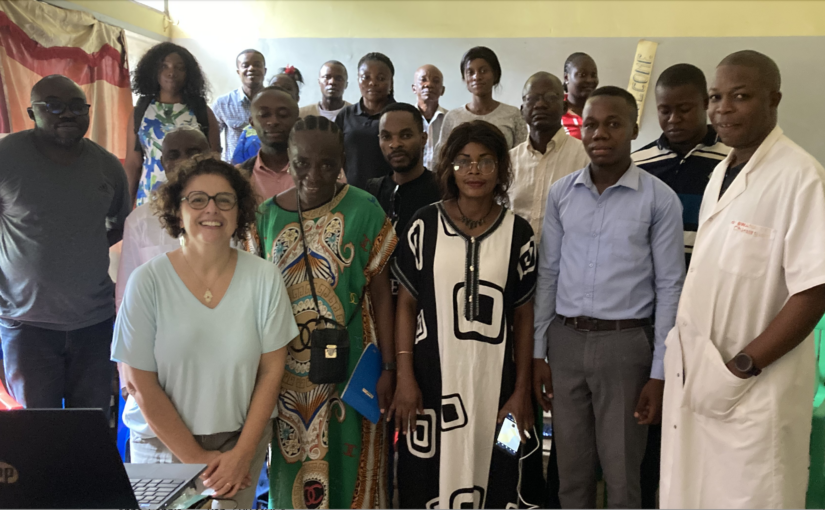
Header Photo: introductory visit to the Wangata site, attended by Principal Investigator Dr. Tyty Bwana, Director of Wangata General Hospital, and his team, by the sponsor PANTHER. @PANTHER